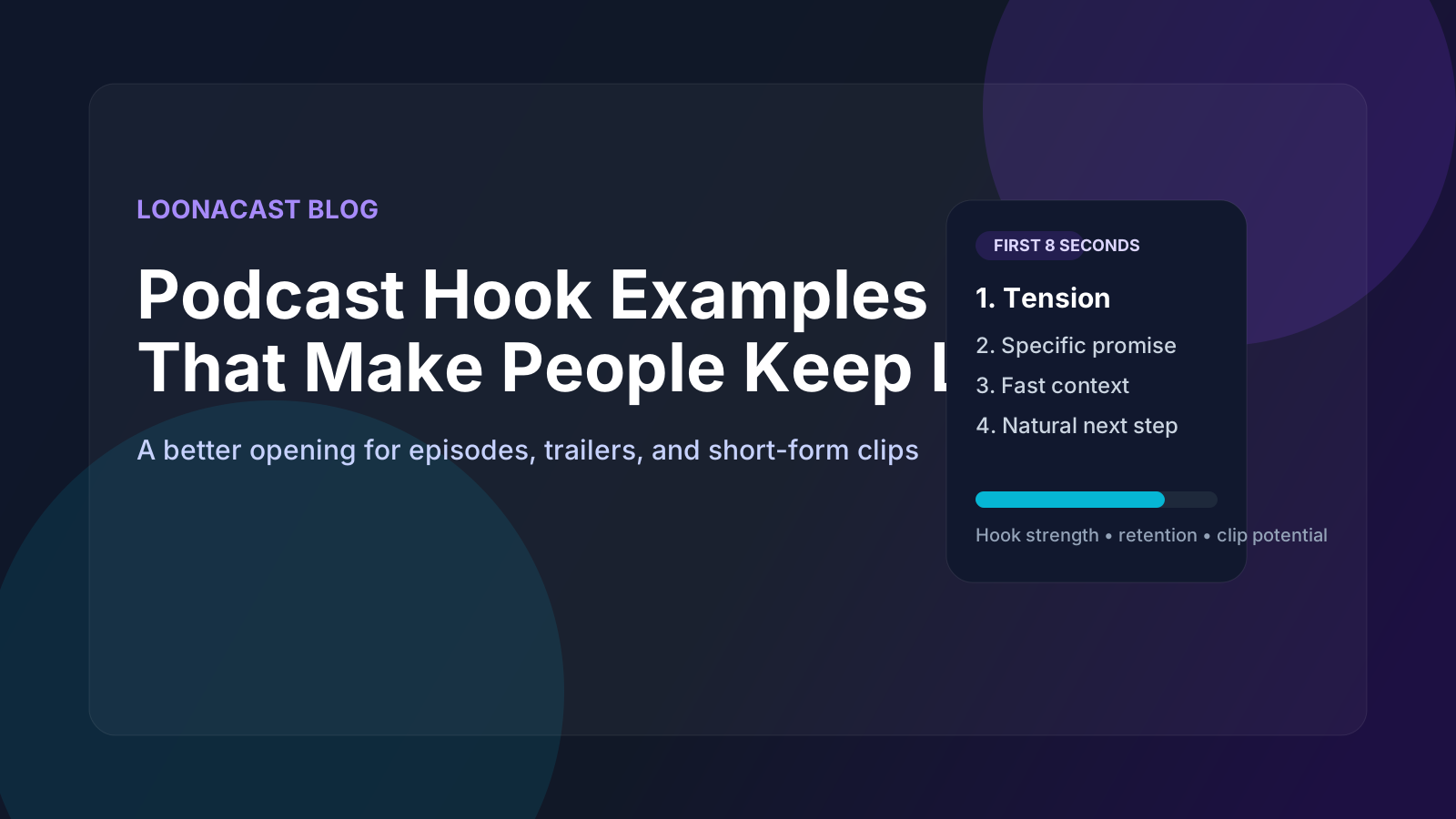
Podcast Hook Examples: How to Open Episodes and Clips So People Keep Listening
A practical guide to writing better podcast hooks for episodes and clips so more people make it past the first few seconds and into the actual conversation.
Most podcast intros are too polite. They say hello, thank the listener, name the show, mention the guest, and only then arrive at the part anyone might actually care about. By that point, the moment has gone flat.
A strong podcast hook does the opposite. It gives the listener a reason to stay before you spend time orienting them. That matters even more now because the opening is no longer just for your full episode. It often becomes the raw material for your trailer, your YouTube packaging, and the first seconds of the short-form clips you post later.
Recent Loonacast posts already covered adjacent packaging layers like podcast episode titles, podcast thumbnails, and podcast clips for Instagram Reels. This article targets a different search intent: how to open the spoken content itself so people keep listening.
Why the first few seconds matter more than most podcasters admit
YouTube's podcast guidance is unusually clear here. The platform now gives podcast creators metrics like average view duration, key moments for audience retention, and dedicated discovery guidance in YouTube Studio, because the opening stretch changes whether people keep going at all. YouTube also says podcasts with hosts on camera tend to perform better than static visualizations, and its analysis found that 80% of top-watched podcast videos featured hosts on video while those videos saw 2x more views than static visualizations. That is not just a video production lesson. It is a packaging lesson.
If the opening line lands, more people stay long enough to understand the episode. If the opening line is soft, the best idea in the episode may never get heard.
There is also a downstream effect. Better hooks tend to create better clips because they begin with tension, specificity, or payoff instead of throat-clearing. That is one reason a modern AI podcast clip maker is most useful when the source material already contains strong openings and clean moments.
What a good podcast hook actually needs
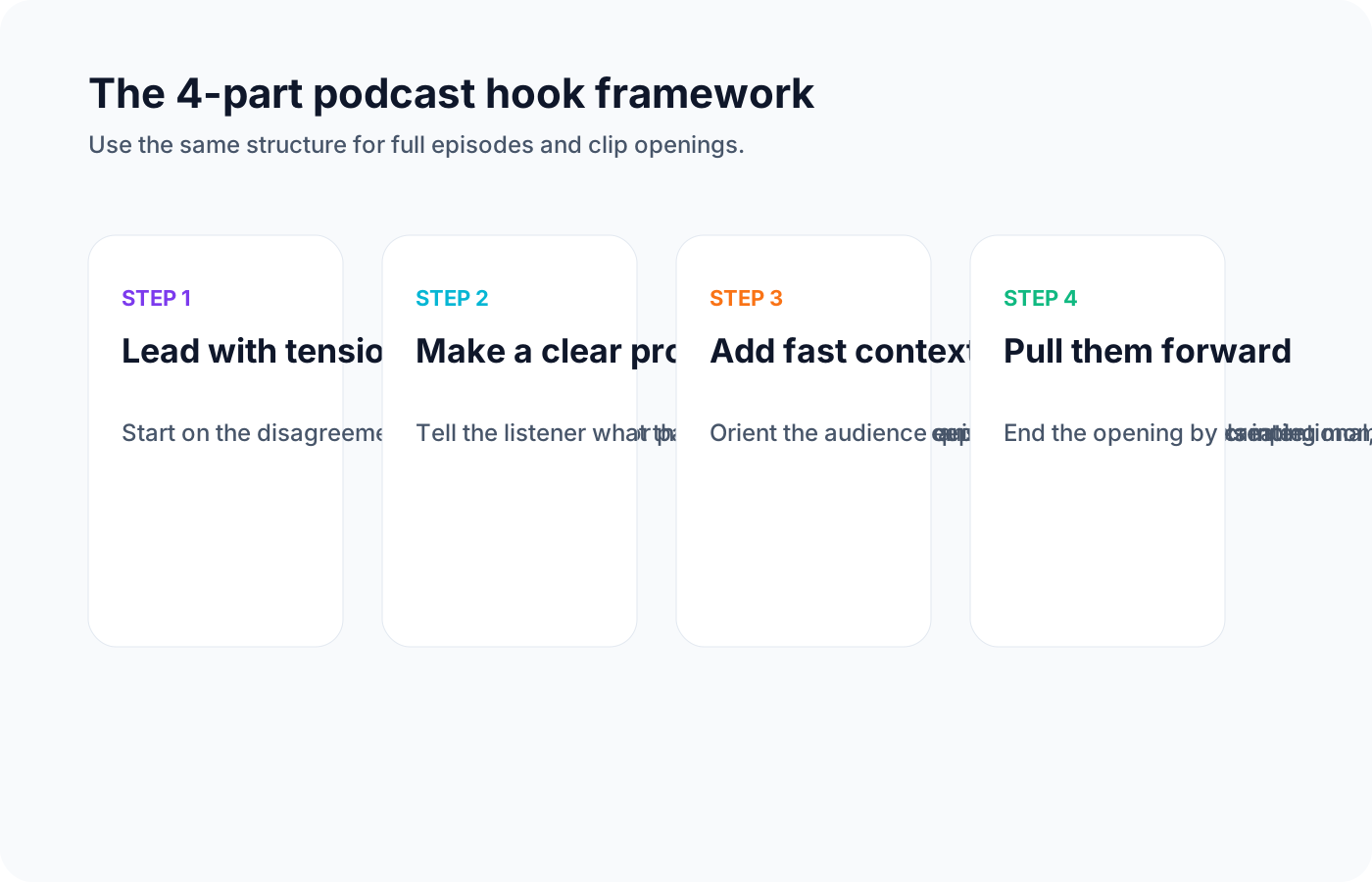
A good hook is not just a dramatic sentence. It usually does four jobs in quick succession:
- Creates tension with a disagreement, sharp claim, mistake, surprise, or unresolved question
- Makes a promise about what the listener will get if they stay
- Adds context fast so the opening feels intentional rather than confusing
- Pulls the audience forward into the next idea instead of letting the energy drop
That is the practical difference between an opening that feels editorial and one that feels procedural.
A weak intro says, "Welcome back to the show, today we're talking about podcast promotion."
A stronger hook says, "Most podcasts do not have a promotion problem. They have a packaging problem, and you can usually hear it in the first 20 seconds."
The second line has a point of view. It creates a small amount of productive friction. It also tells the right audience this episode is probably for them.
Podcast hook examples that work without sounding like cheap clickbait
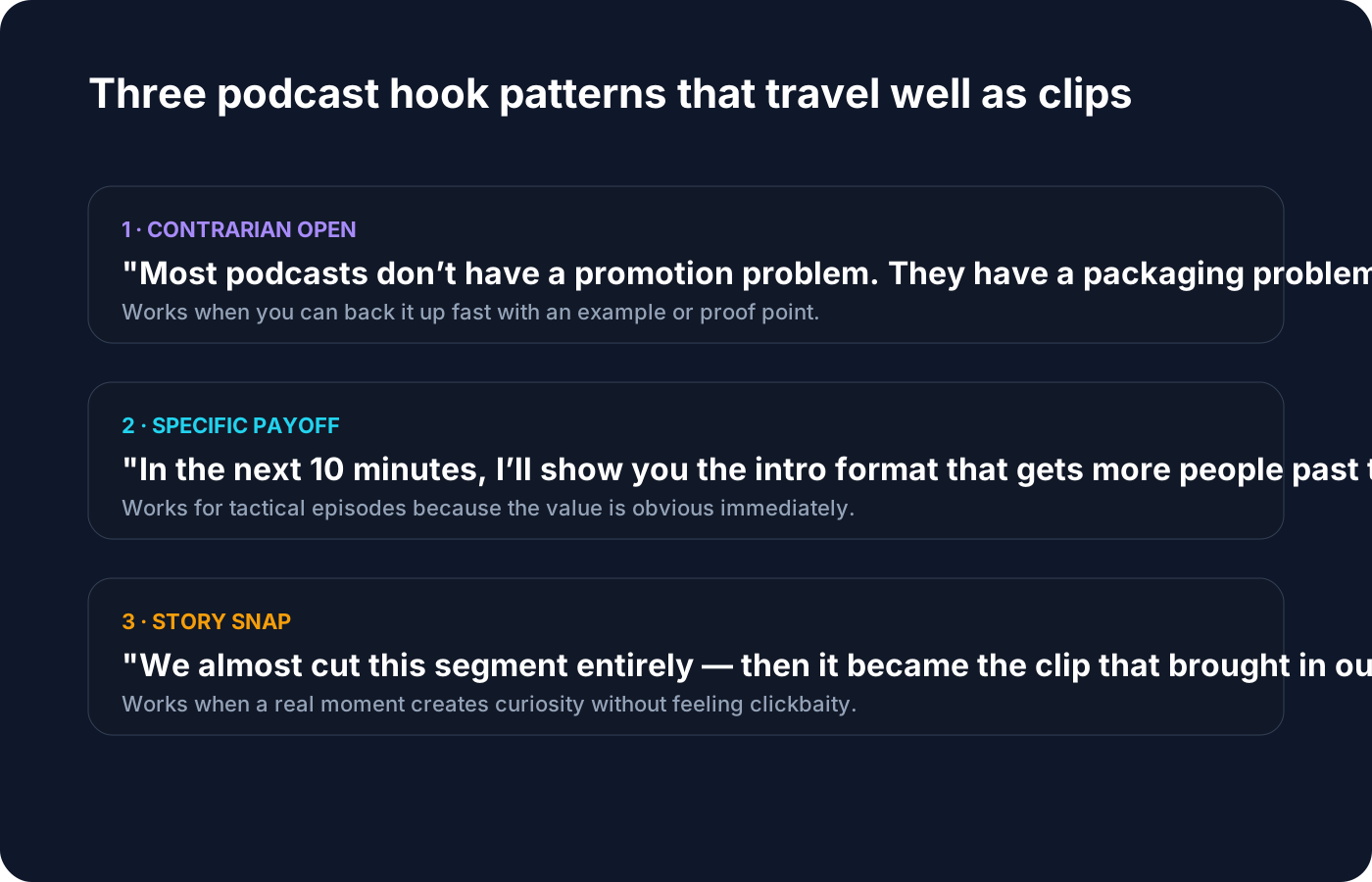
The easiest way to improve your openings is to stop thinking in generic intros and start thinking in repeatable patterns. These are three of the most reliable ones.
1. The contrarian hook
Use this when your episode challenges a lazy assumption.
Example: "Most podcast growth advice is too broad to be useful. If your show is not growing, the problem is usually not effort. It is that your first minute gives strangers no reason to care."
Why it works: it creates tension immediately, but it still points toward a practical payoff.
2. The specific payoff hook
Use this when the episode is tactical.
Example: "In the next 10 minutes, I am going to show you the opening format that gets more listeners past the first minute without turning your show into fake hype."
Why it works: the audience knows exactly what they will get and how quickly they will get it.
3. The story snap hook
Use this when a real anecdote can carry curiosity.
Example: "We almost cut this segment from the episode because it felt too short. It ended up becoming the clip that brought in the most replies all month."
Why it works: it sounds human, specific, and earned.
Common intro mistakes that kill momentum
A lot of podcast openings fail for boring reasons, not mysterious algorithm reasons. The most common mistakes are:
Starting with housekeeping
If your first energy goes to sponsor reads, episode numbers, or admin, you are using the most valuable real estate in the episode for the least compelling material.
Being descriptive instead of interesting
"Today we're talking about B2B podcast strategy" is accurate, but accuracy is not the same thing as momentum.
Hiding the payoff too long
The audience should not need 90 seconds of setup before they know why the episode matters.
Mistaking vagueness for intrigue
There is a difference between curiosity and fog. The best hooks are specific enough to feel credible.
This is where title and opening need to work together. YouTube's creator guidance on thumbnails and titles makes the same broader point: viewers decide fast based on packaging cues. The spoken opening is part of that packaging system too.
How to write a podcast hook you can also clip later
This is the part many teams miss. The best podcast hooks are not only good for the full episode. They are also clip-friendly. That means they can survive when separated from the larger conversation.
A clip-friendly hook usually has:
- a clear thesis in the first sentence
- enough context to stand alone
- a clean emotional tone
- a natural stopping point 20 to 45 seconds later
That is why strong openings often become the best short-form assets. They already begin with tension and resolve into a takeaway.
If your workflow depends on turning episodes into multiple social assets, it helps to record with that in mind. Loonacast is well suited to that process because you can import from YouTube, RSS, Riverside, or file upload, generate a transcript with word-level timing and speaker detection, surface interesting story moments, and then refine clip boundaries in the Studio editor with captions, smart layouts, B-roll, templates, and logo overlays. That makes it much easier to turn a strong opening exchange into a finished social clip instead of losing it inside a long transcript.
If you are building a broader content engine around each episode, this also pairs well with a repeatable podcast repurposing workflow and a tighter podcast newsletter strategy.
A simple framework for rewriting weak podcast intros
If you already have an intro draft, use this edit pass:
Step 1: Cut the greeting and admin
Move the nonessential opening lines lower unless they are legally or commercially required.
Step 2: Find the sharpest claim in the episode
Usually the hook is already somewhere in the conversation. Pull it forward.
Step 3: Add one sentence of orientation
After the hook lands, explain why this episode matters now.
Step 4: End the opening by pulling toward a concrete next beat
A question, example, or reveal keeps the motion alive.
HubSpot's 2025 video marketing roundup, citing Wistia and Wyzowl research, notes that short-form video remains the top investment area for marketers, and that captions and engagement metrics are central to how teams evaluate performance. That should matter to podcasters because a better opening now affects not just retention inside the episode, but the quality of the short assets you build around it.
Final takeaway
A strong podcast hook is not decorative. It is structural. It helps strangers understand the value faster, helps listeners stay long enough to care, and gives your team better source material for clips, trailers, and social packaging later.
If your openings feel flat, do not start by blaming distribution. Start by rewriting the first 20 seconds. In a lot of cases, the real growth problem is not that the episode lacks insight. It is that the insight arrives too late.
Sources
- YouTube for Creators: Podcasting on YouTube
- YouTube Help: Podcast discovery tips
- YouTube Help: Thumbnail & title tips
- HubSpot: 45 Video Marketing Statistics for 2025
Want more reach from your podcast, without the extra work?
Loonacast is the done-for-you agency for podcasters. You record the episode; we turn it into social clips, publish them, and grow your reach.